Emergency Roof Repair in Smyrna, GA
Storm damage does not schedule itself inside business hours. When a limb comes through the decking at midnight or shingles let go over a bedroom during a July downpour, Best Smyrna Roofer's emergency line answers around the clock at (470) 777-7344. The dispatched crew tarps the opening, dries in exposed decking, and photographs everything for your insurance claim before the next band of rain moves up I-75. Stabilize first, repair second: stop the water tonight, then price the permanent fix in daylight with no panic in the decision. Emergency roof repair in Smyrna is quoted before work starts, documented while it happens, and backed by the same written workmanship guarantee as any scheduled job.
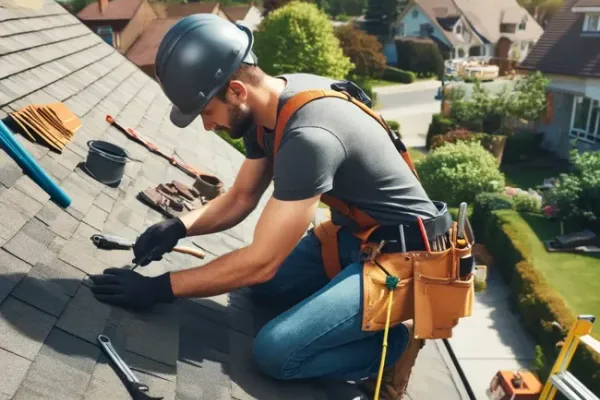
Answering When the Ceiling Starts Dripping
An emergency is a bad time to meet a contractor for the first time, so it helps to know exactly how this works. Best Smyrna Roofer answers urgent calls directly. We are a local roofing company operated by North Atlanta Roofing, and we keep trucks stocked for storm response: reinforced tarps, furring strips, peel-and-stick membrane, decking sheets, and the fasteners to hold all of it through the next front. The person who answers asks three things. Where is the water coming in, is anyone in danger, and can you get a bucket under it. Active hazards like a tree on the structure or sagging framing go to the front of the line. Then a crew rolls, secures the damage, and walks you through what they found with photos, including the honest call on whether your roof needs permanent repair this week or can wait for an insurance adjuster without getting worse.
Tarping Roofs to Hold, Not Just to Cover
A tarp thrown over a hole and nailed through good shingles creates its own leak field. The crew anchors reinforced poly over the ridge with furring strips, laps it shingle-style so wind cannot get underneath, and fastens into areas that are already part of the repair scope. Done that way, a tarp rides out weeks of weather while materials, scheduling, or an insurance decision catch up. Done badly, it becomes the second emergency. The difference costs nothing extra. It is just the right sequence of steps.
Drying In Openings Before the Next Storm Band
Where the deck itself is broken, a tarp alone is not enough. The crew cuts out shattered decking, sheets the opening, and seals it with self-adhering membrane so the damaged area is genuinely watertight rather than merely covered. That dry-in buys time to match shingles, order a chase cover, or wait out a claim without water quietly working on your insulation the whole while. It also means the permanent repair starts from a clean, dry deck instead of a soaked one.
Building Your Insurance File from the First Photo
Emergency work and insurance documentation happen together, not in sequence. Before the first tarp goes down the crew photographs the damage, the debris, and the interior, timestamps all of it, and records the measurements adjusters ask for. Storm damage gets separated from wear honestly, because inflated claims stall and honest ones pay. If you file, the crew meets your adjuster on the roof and speaks the same language. Most Smyrna storm claims treat the emergency work itself as part of the covered scope, so the tarp usually lands in the settlement, not on top of it.
Reaching Every Smyrna Street Fast
Response time in a roof emergency is mostly geography, and Smyrna's is favorable. The city sits in the pocket where I-285 meets I-75, with Atlanta Road and South Cobb Drive running the length of it, so a stocked truck can reach the Market Village area, the Belmont side, or the neighborhoods along the Silver Comet Trail corridor without fighting half of metro Atlanta to get there. Calls get triaged on the phone: active water over living space and structural strikes come first, while loose shingles under a dry forecast hold a firm morning slot. Nobody pretends every call is a five-alarm emergency, and nobody slow-walks the ones that are. That honesty is what keeps the after-storm backlog short enough to actually help.
Securing Tree and Limb Strikes on Older Lots
The 1940s to 1960s cottages and ranches that fill Smyrna's older streets sit under mature oaks and pines, and the low-lying lots toward Nickajack Creek hold enough soil moisture that root plates give way when the ground saturates. When a limb or a whole stem lands on a roof, the crew stabilizes the scene before any cutting starts: tarping what is open, bracing what sags, and coordinating safe removal so the tree does not do more damage coming off than it did going on. Punctured decking gets sheeted and dried in during the same visit. Framing damage gets flagged, photographed, and written into the scope, because a cracked rafter hidden under a quick patch is a problem somebody inherits later.
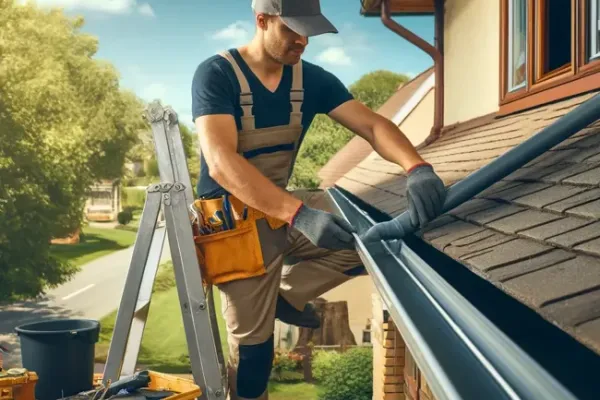
Containing Water Inside 2000s Townhomes
Townhome roofs along Smyrna's newer corridors add a complication: water that enters above one unit can travel the framing and surface in a neighbor's ceiling. The crew treats containment as two jobs, stopping entry up top and cutting off the path inside. That means tarping and drying in the breach, then relieving bellied ceilings, pulling wet insulation clear of the leak path, and setting a drip line so damage stops spreading while everything dries out. Where an HOA or management company controls the roof, the photo file and written scope give them exactly what they need to authorize repairs after one site visit instead of three.

Stabilizing Damage Until the Permanent Repair
Emergency work is deliberately temporary, and pretending otherwise is how storm chasers operate. Every tarp and dry-in comes with a plain statement of what it protects, how long it should be trusted, and what the permanent repair involves. Most emergency calls resolve into ordinary scopes within the week: shingle and flashing repair, a valley rebuild, sometimes a full replacement when the storm finished off a roof that was already old. Because the same crew handles both phases, nothing gets lost in a handoff. The emergency photos feed straight into the final scope, the materials arrive matched to the roof, and the tarp comes off exactly once.

Walking the Claim from First Tarp to Final Nail
Storm claims fail on process more often than merit. The crew's documentation habits, photos before and during stabilization, measurements, a scope written in adjuster language, remove the usual failure points. You get guidance on what policies typically treat as covered storm damage versus excluded wear, help scheduling the adjuster meeting, and a crew representative on the roof for it. Storm restoration is typically insurance work where you pay your deductible and the policy carries the rest. No claim gets inflated and no damage gets invented, and if the honest answer is that a repair costs less than your deductible, you will hear that too, before any paperwork starts.
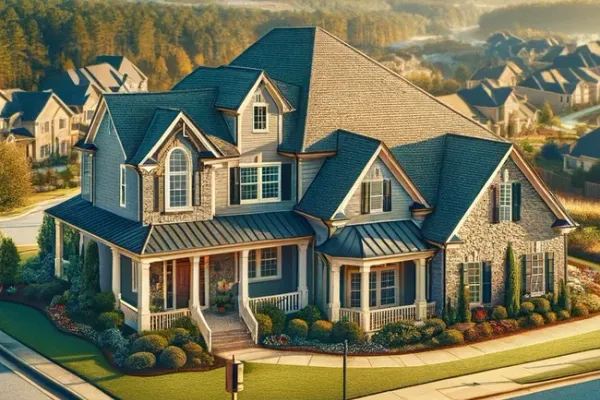
Sorting Real Emergencies from Ones That Can Wait
Not every storm scar needs a midnight crew, and knowing the difference saves money in both directions. Water actively dripping over living space is an emergency. So is any tree contact, daylight visible through the roof, a sagging ceiling, or a yard full of shingles with more rain in the forecast. A lifted shingle spotted on a sunny afternoon is urgent but schedulable, and standard roof repair in Smyrna handles it for less than an emergency mobilization would cost.
Slow stains that appear without a storm usually mean a failed flashing detail or a cracked pipe boot rather than storm damage; that diagnostic path runs through roof leak repair and its tracing process. And when the strike lands on the stack itself, a split crown, a sheared cap, toppled brick, the stabilization is emergency work while the rebuild belongs to chimney repair. Calling the right service first means paying for the right response.
Paying for Urgency Without Getting Soaked Twice
Emergency pricing has a deserved reputation, which is why this one works differently. The quote comes before the work, nights and weekends carry no premium, and stabilization is scoped as the first phase of the permanent repair instead of a separate ticket. Insurance handles most true storm damage minus your deductible, and the documentation from the first visit is built to support exactly that.
For the repair phase, the numbers stay transparent. The prices page lists starting figures for every service, and when a storm finishes off an aging roof entirely, the roof cost calculator turns your address into a replacement range in about a minute, before any sales conversation happens. Financing options exist for the projects that arrive at the worst possible time. Urgency should change the response speed, never the honesty of the number.
Standing By Across Smyrna, Whatever the Hour
Storm response covers every Smyrna neighborhood: the mid-century blocks around Market Village and Williams Park where big trees and original roofs share the same lots, the Belmont area’s rebuilt streets, the townhome runs along the Silver Comet Trail corridor, and the low ground near Nickajack Creek that takes the worst of the runoff. Access stays quick from I-285, I-75, Atlanta Road, and South Cobb Drive no matter which corner of the city sat under the cell that caused the trouble.
Keep the number somewhere you can find it at midnight: (470) 777-7344. If the situation is urgent, call rather than click. If the damage is real but stable, schedule the inspection online and the crew arrives with the emergency checklist already open.
Stop the Water First, Sort the Rest in Daylight
One call gets a stocked crew moving toward your Smyrna roof, whatever the hour. Tarping, dry-in, photos for the claim, and a straight answer about what happens next.
Not sure what a new roof runs? Estimate your roof cost in Smyrna, measured from satellite imagery, or run a storm & insurance damage check.